The Walker

The Woman Behind the World’s Most Famous Product for Seniors—The Walker
By Tim Lewis
Lewis is a freelance writer based in Bangor, Maine
This article was edited and fact-checked by assistant editor Elon Sorkin
You have probably seen them everywhere: from the aseptic corridors of hospitals to retirement homes, even at your local coffee shop. For decades, the walker has helped seniors stay mobile with its simple, functional steel frame. Or how did it come about? The story behind the world’s most famous senior product is full of ingenuity, need-even a hint of whimsical creativity.
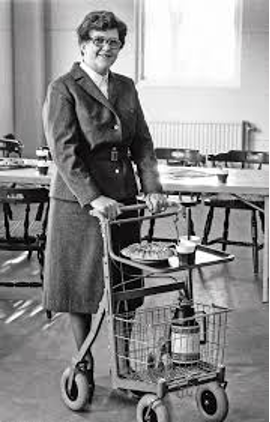
The walker, as we know it today, actually came out of the rather humble invention of a Swedish woman named Aina Wifalk. A former medical professional, Wifalk was compelled to give up work when polio struck her in her early 30s. But that did not slow her down. As a matter of fact, that sparked in her the determination to help people with mobility challenges regain their independence.
In 1978, after observing how stressful walking was for her arms and back, she envisaged something far better-easier on the arms and back: a light, wheeled device to easily support herself. Wifalk’s first design for a walker, which she called the “Rollator,” was just revolutionary. Her motives were oriented neither toward fame nor fortune but rather an urge to help others, pure compassion embodied. Equipped with four wheels, handbrakes, and a seat to rest on, the Rollator quickly became an overnight sensation in Sweden. Soon, its popularity would spread like wildfire throughout Europe and finally land in the far corners of the world.
It was only the first word in Wifalk’s design; through the ’80s and ’90s, the design was being perfected and adapted to meet different sorts of needs by manufacturers and inventors. Soon, two-wheeled walkers for those needing extra balance and stability, three-wheeled versions for those needing maneuverability, and a host of frame shapes and materials to accommodate all the many different sizes and weight capacities became available. Each model walker new was designed to make life easier for seniors-to move about the world with a new found confidence and just a little more bounce in their step.
But with the dawning of the 21st century, technology began to cast a spell on the making of walkers: lightweight, foldable frames easily tucked into a trunk; handles adjusted to personal height, comforting foam handles made sure the hands never felt a thing. Now the walker was sleek, strong, and available in some exciting colors-something that would make any grandparent’s trendy kid proud.
That’s not all: Today’s high-tech walker boasts GPS, integrated alarm systems, and voice-activated lights that make those nighttime walks safe and accessible. Arguably, the world’s best-known senior product has been updated for today’s needs and did so in a way that basically changed a mobility aid into a forceful means to independence.
So the next time any of those things glides down the sidewalk, just remember whence it came: the dream of a woman to make life easier. From Wifalk’s original four-wheeled Rollator, today’s walker has taken quite a ride. Maybe in the years to come, we will even be able to see walkers with espresso machines fitted inside their frames or mini drones fetching snacks for them. Here’s to Wifalk’s invention until then-a gift that keeps the seniors going strong, one step at a time.