By Jackson Hellig
Hellig is a freelance writer based in Des Moines, Iowa
Edited and fact-checked by associate editor Kerry Weinberg
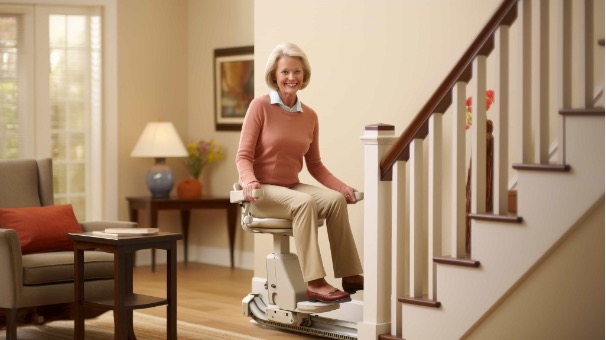
As we get older, stairs can become a bit more challenging. If your home has stairs, a chair lift might be the perfect solution for maintaining independence while moving between floors safely. Installing a chair lift can feel like a big decision, but understanding what’s involved will make the process smoother and give you confidence. Here’s everything you need to know about adding a chair lift to your home.
1. Types of Chair Lifts
Chair lifts come in several styles to suit different staircases and needs. The most common types include:
- Straight Stair Lifts: These are designed for stairs with no curves or landings. They’re usually the most affordable and simplest option.
- Curved Stair Lifts: Custom-made to follow the curve of your staircase, these lifts are ideal for winding staircases. While they’re pricier, they offer a smooth ride up and down curved or angled steps.
- Outdoor Stair Lifts: Built to withstand weather, outdoor lifts can be installed on exterior stairs, making it easy to reach a porch, garden, or garage.
It’s best to choose the lift that matches your staircase’s design and your mobility needs.
2. Cost Considerations
The cost of a chair lift can vary widely. A simple, straight stair lift might cost between $2,000 to $5,000, while curved lifts can be as high as $10,000 or more due to the custom work required. Outdoor models also tend to be more expensive because they’re built with weather-resistant materials. Installation is typically included in the price, but it’s always a good idea to confirm this with the provider.
If cost is a concern, some companies offer financing, and there may be grants or programs to help cover part of the expense. Medicare usually doesn’t cover chair lifts, but some state and local programs, as well as veteran benefits, may offer assistance.
3. Installation Process
The installation process for most chair lifts is quick and straightforward, often taking only a few hours. The chair lift rail attaches to the stairs, not the wall, so there’s usually no need for extensive home modifications. Once installed, the chair will glide smoothly up and down the rail, operated by a remote control or buttons on the armrest.
Before installation, a technician will visit to measure your stairs and determine the best fit for the lift. If you’re getting a curved lift, they may take detailed measurements to ensure the custom rail is perfect.
4. Safety Features
Modern chair lifts come with a range of safety features to give you peace of mind:
- Seat Belts: A simple seat belt ensures you’re securely seated during the ride.
- Swivel Seats: Most lifts have a swivel seat that turns at the top of the stairs, making it safer and easier to get on and off.
- Obstruction Sensors: If something is blocking the lift’s path, it will automatically stop to avoid accidents.
- Battery Backup: In case of a power outage, many lifts have a battery backup to ensure you won’t get stuck mid-ride.
5. Maintenance Needs
Most chair lifts are low-maintenance, requiring only a little attention to stay in good shape. Regular cleaning and occasional checks of the track and battery will keep it running smoothly. Many providers offer maintenance plans, giving you one less thing to worry about.
Installing a chair lift can be a great way to stay mobile and safe in your home, especially if stairs have become difficult. From choosing the right lift to understanding safety features, this small addition can make a big difference in daily life, giving you freedom, confidence, and peace of mind.